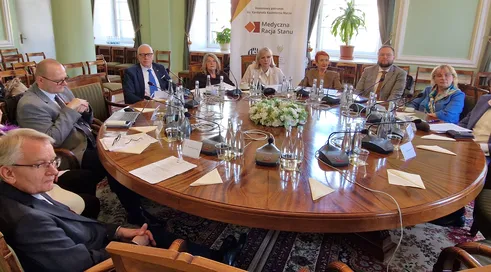
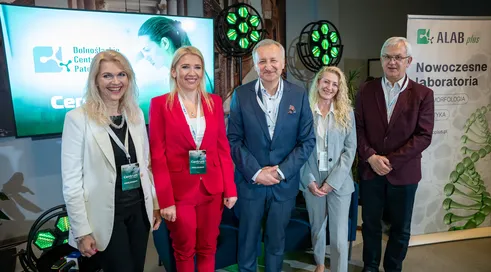
The Lower Silesian Center for Pathomorphology offers new capabilities in pathomorphology, oncology diagnostics and molecular testing. "Pathomorphology is a challenging field, but it is extremely important, especially for oncology patients. At DCP, we combine innovation and technological resources with the knowledge and experience of medical specialists to respond to the needs of doctors and patients in terms of both precision and timing of tests performed." - stressed Tomasz Łaszkiewicz, CEO of ALAB laboratories, during a conference inaugurating the center.
The Lower Silesian Center for Pathomorphology was established in Wroclaw - a center important not only for the region

Published April 30, 2026 07:44
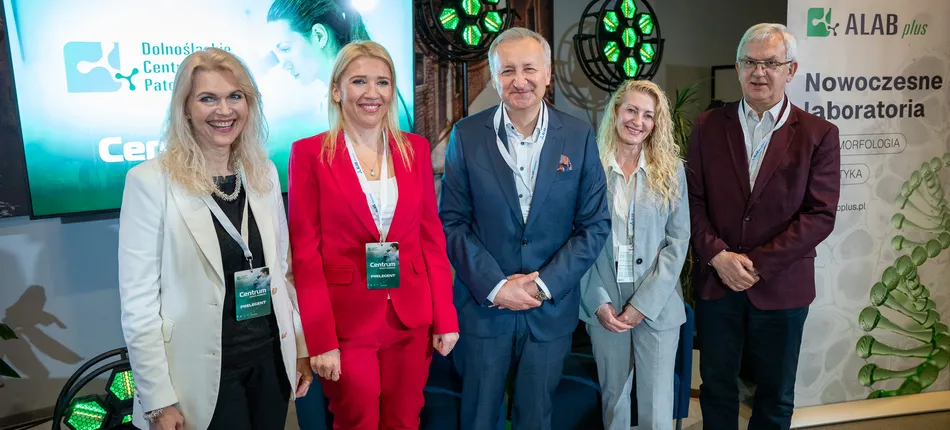
Part of the ALAB Group, the Lower Silesian Center for Pathomorphology (DCP) is a pathomorphology laboratory with an area of nearly 400 sq. m., equipped with advanced equipment, designed in accordance with the highest standards of quality and work ergonomics. Experienced pathomorphologists and histopathology technicians work there. ALAB Group has nine pathomorphology laboratories in the country. Experts at the conference reported that ALAB Group centers helped diagnose 750,000 patients last year. They also stressed that the laboratory places great emphasis on ensuring that patients do not have to wait longer than 14 days for pathomorphology results. "I know that in the market it sometimes varies, while we are keen that in each center this time is reduced to the necessary minimum. This is achieved through logistics, automation of processes, organizational principles." - Director Tomasz Łaszkiewicz noted.
As the head of the Lower Silesian Center for Pathomorphology, Prof. Piotr Ziolkowski, MD, pointed out, the availability of pathomorphology centers in Poland is limited, and in Lower Silesia this is particularly noticeable. This is why the establishment of the DCP is so important for the region. "We have a place where diseases can be diagnosed, often requiring very quick decisions. I realize that fast doesn't always mean good and good also means fast. It is very difficult to combine these two aspects with each other, but we will do our best to meet the expectations of clinicians and patients." - Prof. Piotr Ziolkowski said. The professor stressed that pathomorphology plays a key role in oncology. "Without pathomorphological diagnosis - as confirmed by oncologists themselves - there is basically no effective treatment. That's because establishing the diagnosis, what, if any, are the prognostic or predictive factors for further management of the patient, basically only a pathomorphologist can do." - indicated the head of the DCP. He added that the DCP will be able to serve many Lower Silesian units that have so far struggled to access the laboratory and have been forced to send post-operative specimens, such as to Swinoujscie, Krakow and Bialystok. In his opinion, pathomorphologists and clinicians complement each other and should learn from each other. "I think this is the direction in which pathomorphology should go - that is, more of this kind of clinical pathomorphology, not one that is somewhere as a detached specialty and does something only for itself, because we are de facto for clinicians," he said. - Prof. Piotr Ziolkowski added. As Dorota Waśko-Czopnik, MD, a gastroenterologist and clinical nutritionist, emphasized, the work of clinicians "does not exist without histopathology," many fields of medicine cannot do without histopathology, and reducing the time for evaluating histopathological sections is particularly important in questionable situations. "The cooperation between gastroenterologists and histopathology is invaluable. It's not just about confirming the diagnosis, it's also about targeting, choosing therapy, assessing prognosis, but also minimizing our diagnostic errors." - Prof. Dorota Waśko-Czopnik enumerated. She stressed that histopathology is very helpful in determining whether a lesion is benign or malignant, as well as the type of cancer and the stage of the disease. She also pointed out that reduced time for evaluating sections and greater precision offer the possibility of more effective patient treatment and development. "Clinicopathological cooperation is important, especially now that reimbursements are changing, when we can include certain treatments only after the histopathological result is available." - Prof. Dorota Waśko-Czopnik stressed.
News source: PAP MediaRoom